We arrived on my birthday, November 25, 1959, the year I turned eight. Although there were no presents because of the haste of our move I could not know the gift we all were receiving in our father's transfer to Pueblo. Appropriately, the next day was Thanksgiving.
Although we had loved the mountains and life in Denver, and had forayed into several wonderful adventures during our brief stay in Colorado Springs, we were about to live through the most enchanted time of our lives.
Assembly-line style, we carried boxes from the truck our father had rented to move our belongings into the white stuccoed house with green trim, taking in details about our new home. It had a modest Tudor look to it, was framed by elms in front and back, and a rather unruly shrub between the windows. The front door was thick wood, appropriate for a medieval fortress, with a little door to peak out of that latched from the inside. The inside was a modern aqua blue--a designer, we were told, had owned the house before us. Draperies framing the living and dining room windows made of quirky abstract prints in light colors. A built in display and book shelf was on the wall opposite the fireplace in the roomy living room.
The kitchen was a calm creamy yellow but the ante room between the kitchen and stairs leading to the basement was a brilliant, not quite mustard yellow. Our mother announced that painting the ante room would be a top priority, but it was still the same color when we moved out several years later. In the kitchen were a staggering number of shelves, all of which needed cleaning before we could put away the dishes, and one small appliance garage just right for a toaster.
The bathroom had a soft blue terry shower curtain that contrasted with the pink and black metal tiles that lined the wall. Like the curtains in the front of the house, a little quirky.
There were two upstairs bedrooms, both ample.There were two parents,two daughters, and a son when we moved in.In Colorado it was almost unheard of that you didn't have a basement. We did, with a beautifully paneled light knotty pine bar at one end of a long black and white tiled floor game room.
In the corner behind the game room was a little coal room, long out of use, with a single small window that had been the coal chute. Behind the remaining width of the game room was the laundry and storage room, where all the Christmas decorations were kept.
Mother was quick to turn the coal room into David's abode. Mary got the nice front bedroom, and I was consigned to the 8 X 10 room, with what was probably the wine closet for my clothes closet, just behind the bar. Mother curtained off the open room with a feminine floral print for privacy and I was good to go.
The truck unloaded, our things arranged, we spent our first night in what was to be the home of our hearts. The morning was cold when we awakened the following day. We were grateful to have a fireplace, and a nice furnace, which was allowed to heat the 3 core rooms upstairs. (All the bedrooms had their furnace grates shut and we slept beneath quilts piled so thick we could hardly turn over, but kept a window cracked in almost any weather because we craved the fresh, clean air.)
After whatever morning chores we had were done, my brother, David, and I coated up and ventured out into the neighborhood to see who we might meet. It was the Thanksgiving holiday and the sounds of other children nearby piqued our curiosity. We made our way across the front yard when two boys appeared from behind the fence across the street and began to throw rocks at David. He seemed non-pulsed and just picked them up to throw 'em right back. Pretty soon they were best friends, my brother, David, and David Norton.
The Nortons lived in a big white farmhouse that was probably there before the rest of the neighborhood encroached from the south where the downtown area was.
We lived on 22d Street between Court and Grand streets, and to our south on Grand were an array of tall turn-of-the-Century row houses. They were punctuated with filigree and gingerbread, every one having a porch. To our north on Grand after the first lovely Victorian style home came a series of Bungalow and Mission style homes on both sides of the street. In general the surrounding neighborhood dated to the turn of the century every block or so but was filled in mainly with homes dating to the 20's and 30's.
As we explored the neighborhood, my brother and sister and I found the park just five blocks south, it's name dreamy: Mineral Palace Park. Specimens of different trees still had labels declaring their origins. Waterlilies lay dormant beneath ice in a small pond that became a skating rink when it was cold enough. A community hall flanked one side of a beautiful lake that was accented by two beautiful arched bridges. Behind a shrub-covered chain link fence was the right of way and the noise of the highway. Across the lake from the community hall, a band shell with an Art Deco rainbow frame presided over the stage from which we would later hear the city orchestra play in the summers. A swimming pool and a playground in the park seemed mere fringe benefits. A bench to dream upon was all we needed aside from the carefully staged beauty around us.
Winter came quickly with an abundance of snow, and the walk to Thatcher Elementary School was pure joy. Although everyone shoveled their sidewalks, we loved to walk in the drifts to each side, making deep prints in the snow. An easy snowball fight could last for blocks as friends joined the parade along the way.
Grand street was the usual path we took toward Thatcher, but it was my preference to take Court because the trees from both sides of the street formed an ice Cathedral overhead for most of the walk. Ice cicles draped every tree and house, snow frosted and softened the landscape and silenced the scene to allow the gentle packing of footprints left behind to assure a record of your travel to a warm destination. Coats and hats and boots left on hooks and wooden floors were reclaimed at the end of the day.
I remember seasons before Pueblo only in flashes of time, but the walk to school gave a little girl a lot of time to notice everything. Winter slowly gave way to violets blooming through melting patches of snow. Daffodils and tulips came next, then Lilacs, heavenly Lilacs.
Mrs. Arthur, our next door neighbor had 3 different Lilacs: a light purple, a dark purple, and a white. We had two light purple not quite as tall as hers had grown to be, but we could sit under them to read Under the Lilacs by Louisa May Alcott. How romantic!
The elms in the front and the back had crotches just at the right height to be able to climb. Across the street, the Nortons had a tall pine with sturdy spiral stair branches to climb. A wooden swing suspended from a thick rope hung beneath the branches of their cottonwood tree.
When the school year wrapped up, we were scattered among relatives so Mother could work without worrying about what kind of trouble we were getting into, and as summer wound down, we would return home for the preparation for school. Mother sewed nearly everything we wore, and there was shopping to do for material and shoes. Her machine hummed out a complete wardrobe within days.
With sweaters and coats bought we were glad to start the annual migration back to school. Doors along the way opened as friends joined us for the walk through crunchy leaves. The sweaters of the morning were too hot for the afternoon sun on our shoulders as we returned home.
The familiarity of the routine was right out of Leave it to Beaver or My Three Sons. Something fragrant was cooking for dinner when we came in from school. Daddy would up from his big Family Bible, marking his place with one finger, and say,
"You need to get a Nanner (banana) and eat it right now!"
Filling our cheeks and bellies with the stuff of life, covering our bodies with hand-made clothes, providing our minds with beauty and joy that would last a lifetime, we were so very lucky. This time of life was the best, the very best present we could get.
Two (c) Nita Walker Boles
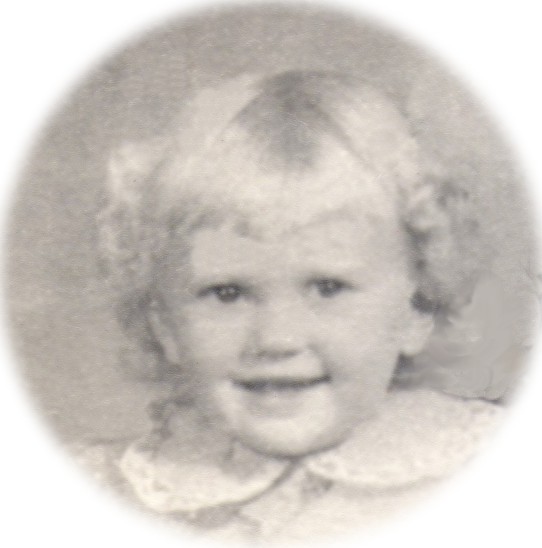
Curls Courtesy of Plastic Turtles
Thursday, February 24, 2011


Sunday, December 5, 2010
A Winter Wonderland
Although we lived there almost 5 years, I have never seen a single photograph from that period of Court Street in full winter regalia, so I am left with my memories of winters in Pueblo, Colorado and a need to describe the splendor of a cherished life there.
Our home, between Court and Grand street on 22nd was a white stuccoed Tudor with green trim. It fit oddly into the cross-section of building periods represented within a few square blocks. Directly across the street a large farmhouse and its' outbuildings occupied more space than the rest of the neighborhood lots, which had undoubtedly been carved from its' original acreage. Heading south around the corner on Grand were bookended Victorian era row houses, ambling and ample, some made into apartments. To the north, after a couple of lovely and graciously grounded Victorian homes, a succession of Arts and Crafts style Bungalows stretched on,and spread, seemingly in every direction for several miles. Court street had a few brick houses that seemed that seemed to have been more recently built, but by and large it was a '30's neighborhood all the way south to Mineral Palace Park. An abundance of trees of every kind and landscaping, fountains, and statuary, to complement different homes made any stroll interesting.
In the spring I preferred the walk past the Victorians toward Thatcher Elementary school. But in the winter nothing could possibly compare with the five block walk down Court Street through a tall cathedral of interlaced branches laden with icicles and an ample dusting of snow .
Leaving the warmth of our home and dressed in wool from head to toe, we would join the silent march of people, some as young as 5 and others as old as 18, headed toward our various schools. The high schoolers walked a full mile to the old Centennial High, and the Junior High, Freed, was something more than a half mile. If you were on the way to the elementary school you avoided the carefully shoveled walks and took your trek through the mounds of snow on either side of the walk in order to enjoy the muffled crunch of the snow as you packed it with your boot prints.
The few conversations were animated, but hushed in the winter, because the snow both insulated and amplified every sound. In the white silence, the occasional drip of ice melting from a roof or breathing of the earth beneath the snow pack left an anticipation of something inexpressible. Peace and quiet reigned. The work of living was shortened by the hours allowed by the sun. Crocus and violets were months away and I willed them dormant to allow plenty of time for this long respite the earth seemed to crave. Snow left a long trail toward Christmas and a school holiday. It made evenings by the fire place with popcorn or hot chocolate and Nat King Cole or Sing Along with Mitch, or, better, the piano and Christmas carols.
In the rituals of winter our mother scattered cornbread on the snow for the birds that failed to migrate, commenting on one particularly fat robin who had stayed behind. She hung our father's starched shirts on the line to freeze, their arms outstretched in a bizarre gesture satisfied only by the singed smell of the iron soothing away the wrinkles and restoring warmth. Periodically after a fresh snow a big enamel pan was filled with the white fluff, sugared, and vanilla flavored for "snow ice cream".
My brother considered it play to shovel the walk, at least at first, and the widow next door was given a free shoveling guaranteed by our parents. If the adults minded shoveling sidewalks or driveways, we were unaware. It was with a smile that our father took off his overcoat to inform us he had put chains on the tires.
The house was kept cold, except for the living areas and kitchen. Thawing was done in front of an open oven in the kitchen, the fireplace in the living room, or grate from the furnace. Drawn together by the warmth, we sang at the piano or watched television shows that presented our portion of the Camelot dream. Walter Cronkite assured us that we were all a part of a greater whole as we contemplated the changing times. The Lovely Lemon Sisters sang sweetly. Haws, Adam, and Little Joe, all failed to marry, but stayed close to Pa doing chores on the Ponderosa. And Captain Kangaroo kept the Treasure House ready for us when we awakened every morning.
Although there were furnace outlets in our bedrooms, we preferred our bedrooms cool, at least a half inch of window open to allow fresh air in the winter. Pajamas were flannel, quilts were wool and corduroy. Once in bed we could hardly turn over for the weight of quilts that took a while to warm to body temperature.
On weekends and during the holidays it was our joy to make forts for fabulous snowball fights. A good snow could provide a virtual empire of walls and fortresses, and an inexhaustible supply of snowball fights for the entire neighborhood. Some winters our growth outstripped our parents' budget, and the right size in boots or mittens was not on hand. Several layers of socks and plastic bags tied over our shoes (or hands, in the absence of mittens) enabled survival for battlefield forays.
If we were lucky, it was the year of the Wintertime Olympics. In that case, Mother celebrated with a batch of homemade yeast rolls and butter. Or Daddy popped corn in the little fireplace pan with a wooden handle. We were fortunate enough to have ice skates and after watching the graceful presentations on television, headed to the park to skate in less graceful patterns, but with no less satisfaction than the Olympiads.
Eventually the last snow melted and the violets and crocuses presented the first colors of spring as the noise of birds filled the branches on Court Street and in the expanse of the park. We peeled back some of the layers on our beds, and shed our coats for spring sweaters. As for me, I shifted my walking arrangements to gaze at the Victorians on Grand street once more, since the park offered the main visual course in the spring, and I had to get to school on time.
Our home, between Court and Grand street on 22nd was a white stuccoed Tudor with green trim. It fit oddly into the cross-section of building periods represented within a few square blocks. Directly across the street a large farmhouse and its' outbuildings occupied more space than the rest of the neighborhood lots, which had undoubtedly been carved from its' original acreage. Heading south around the corner on Grand were bookended Victorian era row houses, ambling and ample, some made into apartments. To the north, after a couple of lovely and graciously grounded Victorian homes, a succession of Arts and Crafts style Bungalows stretched on,and spread, seemingly in every direction for several miles. Court street had a few brick houses that seemed that seemed to have been more recently built, but by and large it was a '30's neighborhood all the way south to Mineral Palace Park. An abundance of trees of every kind and landscaping, fountains, and statuary, to complement different homes made any stroll interesting.
In the spring I preferred the walk past the Victorians toward Thatcher Elementary school. But in the winter nothing could possibly compare with the five block walk down Court Street through a tall cathedral of interlaced branches laden with icicles and an ample dusting of snow .
Leaving the warmth of our home and dressed in wool from head to toe, we would join the silent march of people, some as young as 5 and others as old as 18, headed toward our various schools. The high schoolers walked a full mile to the old Centennial High, and the Junior High, Freed, was something more than a half mile. If you were on the way to the elementary school you avoided the carefully shoveled walks and took your trek through the mounds of snow on either side of the walk in order to enjoy the muffled crunch of the snow as you packed it with your boot prints.
The few conversations were animated, but hushed in the winter, because the snow both insulated and amplified every sound. In the white silence, the occasional drip of ice melting from a roof or breathing of the earth beneath the snow pack left an anticipation of something inexpressible. Peace and quiet reigned. The work of living was shortened by the hours allowed by the sun. Crocus and violets were months away and I willed them dormant to allow plenty of time for this long respite the earth seemed to crave. Snow left a long trail toward Christmas and a school holiday. It made evenings by the fire place with popcorn or hot chocolate and Nat King Cole or Sing Along with Mitch, or, better, the piano and Christmas carols.
In the rituals of winter our mother scattered cornbread on the snow for the birds that failed to migrate, commenting on one particularly fat robin who had stayed behind. She hung our father's starched shirts on the line to freeze, their arms outstretched in a bizarre gesture satisfied only by the singed smell of the iron soothing away the wrinkles and restoring warmth. Periodically after a fresh snow a big enamel pan was filled with the white fluff, sugared, and vanilla flavored for "snow ice cream".
My brother considered it play to shovel the walk, at least at first, and the widow next door was given a free shoveling guaranteed by our parents. If the adults minded shoveling sidewalks or driveways, we were unaware. It was with a smile that our father took off his overcoat to inform us he had put chains on the tires.
The house was kept cold, except for the living areas and kitchen. Thawing was done in front of an open oven in the kitchen, the fireplace in the living room, or grate from the furnace. Drawn together by the warmth, we sang at the piano or watched television shows that presented our portion of the Camelot dream. Walter Cronkite assured us that we were all a part of a greater whole as we contemplated the changing times. The Lovely Lemon Sisters sang sweetly. Haws, Adam, and Little Joe, all failed to marry, but stayed close to Pa doing chores on the Ponderosa. And Captain Kangaroo kept the Treasure House ready for us when we awakened every morning.
Although there were furnace outlets in our bedrooms, we preferred our bedrooms cool, at least a half inch of window open to allow fresh air in the winter. Pajamas were flannel, quilts were wool and corduroy. Once in bed we could hardly turn over for the weight of quilts that took a while to warm to body temperature.
On weekends and during the holidays it was our joy to make forts for fabulous snowball fights. A good snow could provide a virtual empire of walls and fortresses, and an inexhaustible supply of snowball fights for the entire neighborhood. Some winters our growth outstripped our parents' budget, and the right size in boots or mittens was not on hand. Several layers of socks and plastic bags tied over our shoes (or hands, in the absence of mittens) enabled survival for battlefield forays.
If we were lucky, it was the year of the Wintertime Olympics. In that case, Mother celebrated with a batch of homemade yeast rolls and butter. Or Daddy popped corn in the little fireplace pan with a wooden handle. We were fortunate enough to have ice skates and after watching the graceful presentations on television, headed to the park to skate in less graceful patterns, but with no less satisfaction than the Olympiads.
Eventually the last snow melted and the violets and crocuses presented the first colors of spring as the noise of birds filled the branches on Court Street and in the expanse of the park. We peeled back some of the layers on our beds, and shed our coats for spring sweaters. As for me, I shifted my walking arrangements to gaze at the Victorians on Grand street once more, since the park offered the main visual course in the spring, and I had to get to school on time.
Friday, September 10, 2010
The Hills Were Alive
If the Heavens are the Throne of God, and the Earth His Footstool, then the Rocky Mountains must be the very spot where He rests His feet. When we were children, the hues of deep forest green and dusky blue pines and spruces, and the flickering of green aspen leaves against white and black trunks provided a tapestry of smells and sounds that refreshed and nourished our spirits. Thirsty for water pumped through rock formations that bade us drink for the taste of springs secreted deep in the earth, we filled our cups. The cold streams and rivers that ran in abundance provided the cleansing noise of rushing water spending itself against stones rounded with the effort of a million years. Falls spilling over magnificent cliffs terrified with constant thundering that this was Hallowed Ground. We were ancient as the woods and waters once settled within the canyon walls. We roamed and climbed, finding secret places of moss hidden beneath the long branches of shrubs at the water's edge.
Evergreen and Estes Park were places we frequented, but our father and mother loved the road and we searched out places like Rabbit Ears Pass and Steamboat Springs. In plateaus we found mining towns such as East Cliff, Middle Cliff, and West Cliff. We wandered through museums where our father talked with locals about UFO sightings reported there. Through the languid, pleasant years that seemed as though they could not possibly end, we explored both sides of the Continental Divide, witnessing the astonishing metamorphosis from forest to arid Pleocene bluffs
eerily brooding over dried seabeds now watered by two rivers.
We were at the pinnacle of Earth's diversity and beauty, and most precious of all, a family. The songs of road trips often came from Broadway musicals, frequently The Sound of Music, as my sister and I harmonized together. At the end of the day we would make the drive, long or short, back to our home, colors, sounds, and sensations memorized and implanted, a part now of our genetic makeup.
Evergreen and Estes Park were places we frequented, but our father and mother loved the road and we searched out places like Rabbit Ears Pass and Steamboat Springs. In plateaus we found mining towns such as East Cliff, Middle Cliff, and West Cliff. We wandered through museums where our father talked with locals about UFO sightings reported there. Through the languid, pleasant years that seemed as though they could not possibly end, we explored both sides of the Continental Divide, witnessing the astonishing metamorphosis from forest to arid Pleocene bluffs
eerily brooding over dried seabeds now watered by two rivers.
We were at the pinnacle of Earth's diversity and beauty, and most precious of all, a family. The songs of road trips often came from Broadway musicals, frequently The Sound of Music, as my sister and I harmonized together. At the end of the day we would make the drive, long or short, back to our home, colors, sounds, and sensations memorized and implanted, a part now of our genetic makeup.
Sunday, August 15, 2010
How do you tell someone what a library is and what it is for? Reflections on the impact of words someone else bothered to write and probably did not get paid well for, and upon the gracious gifts to community by the wealth makers and creators of our system of economy.
As I have revisited my childhood, a dominant theme for me has been that we were just above the poverty line-maybe just a fraction, and that we were at the same time rich. Two things contributed to that truth: 1. We lived where a great industry was on its's last leg, and 2. we enjoyed the public gifts of people made fabulously wealthy by the riches of the earth: Nearly every well-known and some lesser known Moguls of the 1800's contributed heavily to civic development, parks and schools, and to libraries. Microsoft and others who give today are doing what has been done before. Philanthropy is a blessing of American life we take so for granted.
Old postcards of the McClelland Public Library show a white stone building with what looks to be a red tile or possibly a copper roof. But then the building was built about 1902. Dale Carnegie had made good on his promise to spread his fortune about the country by creating libraries where communities raised adequate seed money, and McClelland dished out a considerable sum to make it a beautiful reality. It was 1960 when we first climbed the steps of a building made of stone hewn from the not-distant mountains and entered the repository of all good things. Polished marbled floors and columns supported the weight of knowledge contained in thousands of books. It was quite simply an architectural delight.
In the basement where the restrooms were, inaccessible doors held research and precious materials I wished to prowl. In a second floor room you could plainly see through the glass a Mummy's Sarcophagus casually propped against the fireplace tile. Our Girl Scout troop would later visit that room and the story of how the Mummy had found a home in Colorado was told only to be forgotten in my adult life. But for now, where did the wings to the right and the left go? What other museum treasures, I wondered, could this fabulous and spacious monument hold? The third story and full basement must have been full of needful knowledge, all under wraps!
On the main floor, fine woods crafted into moldings and ladders, desks and drawers, newspaper racks, and card files, all with a patina told of over 60 years of earnest use by thousands of fingers that had traced their grain. High ceilinged rooms opened upon rooms with mezzanines overlooking the activities below. Quiet and order prevailed.
We were ushered to the youth area, but at 9 years of age I had read the Funk & Wagnall's obtained by frugal parents one at a time at Safeway with qualified purchases, and the Bible had broadened my vocabulary and reading skills well beyond most of the fiction offered there. A good dictionary with the origins of words was part of our home library, as was the National Geographic and a rotating supply of Readers Digest Condensed Books--many too old and boring for my taste.
Restlessly I joined my sister with stacks of 5 or 6 books to last a week or two until I became bored with that section. Nancy Drew, the Boxcar Childeren and the Bobbsey Twins seemed trite. Louisa May Alcott and Robert Louis Stevenson seemed worthwhile and I quickly burned through them. Rusty's Spaceship is the only other book from that section having any lasting impact on my imagination. At the old age of 11 I was ready for more serious reading.
Growing up during the Civil Rights Movement with a father whose evening never started without a heavy dose of Walter Chronkite had made it impossible not to be alert to the meaning of certain words. But somehow I failed to grasp what a ghetto was. In our lives in Denver and Pueblo we were not really far from what must have been the poorest of the poor. But the prosperity of the Gold Rush Years had left rather nice housing for even them--and us, and an abundance of fresh crops from the surrounding plains made it possible to feed a family fairly inexpensively.
But one day, dressed in a red fabric hardback was a book whose name arrested me then and there;
The Ghetto. I thumbed it's pages, small print and thickness undaunting. Maybe I just needed that book this time. So I took it to the checkout desk where it was duly stamped when I showed my library card, then went to sit in the foyer to read while my siblings finished their searches.
It wasn't the Ghetto being spoken of in the nightly news, as it turned out. Instead, it was The Warsaw Ghetto. Very quickly I was being drawn into a world I had thought existed in the distant past. My friend, Helen, attended Sabbath School and spoke Yiddish at home. Her parents were nervous about Gentile visitors, and I scarcely remember her mother having spoken English. Both Helen and I were born in 1951 and that, to us, was long after the War had ended. But Helen's parents both bore the numbers scorched on their skin to identify their precarious place in Nazi concentration camps. They had managed to survive and Helen and her older sister, Frieda, were the ages of myself and my older sister, Mary.
Our father always called us to the television any time a program dealt with the atrocities of WWII. I was not born yet when our great uncle, a Colonel, brought home 18mm film of the liberation of a camp (we believe Dachau) which he was present for. The family had watched impossible wretchedness, never to forget as he projected it on the farmhouse wall. He told of gathering up the townspeople and marching them to and through the camp to impress upon them what their cooperation had wrought.
Now I was reading the stories of countless individuals, adults and children who learned to resist, who tied up German resources and time, and who gave their lives trying to preserve the lives of their families and friends. It was compelling and life changing. I felt older and more wary than my class mates who were still engaged in childhood games. Throughout our city were many Eastern Europeans who had immigrated before and after the war. We all had more to be grateful for than we could possibly imagine, I thought.
Now were books like the Diary of Anne Frank, and books like An Episode of Sparrows. But we lived in a peaceful vacuum where we could sell pop bottles for enough cash to take a stroll down a shady street with a friend and have a Coke and some peanuts, or save money from lunch for Beatle records, somehow immune to the Cuban Missile Crisis. My gratitude for this lucky life increased measurably. And I would finally learn about a different kind of ghetto not from books, but from the news as blacks demanded and obtained freedom they were already guaranteed under the Constitution. And already simmering in Southeast Asia was the next war......
History began to have weightier relevance as we watched the evening news and I wondered how the seemingly simple concepts our forefathers had fought for were so twisted and complicated when politics and media mixed. The books, the films, the stories of both happiness and imagination,
and those tragic accounts of barren, bleak worlds where someone could do something to change it all, combined to help me do the one thing my father wanted me to do.
So many times he would turn from the news report or look up from a newspaper and say, "A lot of eople are like sheep. They say, "I think..." and then repeat what they read in a paper or book or heard on the news. The fact is, " he would say, "they really don't think at all. They just read or hear something on the news and repeat what they've been told." Our parents read, and they made sure we read and watched and asked what we thought, expecting us to think.
Not every book was weighty and ponderous. There were Lewis Carrol tales and Robert Lewis Stephenson poems. The Brontes and the Brownings, all familiar friends to visit. And sifted between, other books by lesser known authors to take away the boredom of a sweltering summer evening or long winter's night and leave behind thoughts and musings over subjects we might never have approached alone.. Check out, read, gather up, check in. Up the stairs, through the doors, down the stairs, into the light of Day.
Today we blog on, still unpaid and unappreciated authors chronicling what we are witnesses to. We had moved away when the library was torn down and replaced with a new and comparatively undistinguished edifice. It was replaced with one more suited to modern needs, part of a system that included satellite buildings to serve a growing geographical area. The financial moguls who give now include Bill Gates, the Hunt Brothers, and T. Boone Pickens. They have it right: giving back is sweet. Someone after us will want to read what we did, hear what our music sounded like,and learn what a hero really is. The laptop and the computer terminal are now the McClellan Public Library. Books are sold in the stores, but long afternoons are spent honing computer game skills and evenings searching topics to understand homework assignments.
It feels strange to look back into that room with the Sarcophagus. Was the mummy still in there, or was it an empty box? I don't remember the answer--I just remember the wonder.
Old postcards of the McClelland Public Library show a white stone building with what looks to be a red tile or possibly a copper roof. But then the building was built about 1902. Dale Carnegie had made good on his promise to spread his fortune about the country by creating libraries where communities raised adequate seed money, and McClelland dished out a considerable sum to make it a beautiful reality. It was 1960 when we first climbed the steps of a building made of stone hewn from the not-distant mountains and entered the repository of all good things. Polished marbled floors and columns supported the weight of knowledge contained in thousands of books. It was quite simply an architectural delight.
In the basement where the restrooms were, inaccessible doors held research and precious materials I wished to prowl. In a second floor room you could plainly see through the glass a Mummy's Sarcophagus casually propped against the fireplace tile. Our Girl Scout troop would later visit that room and the story of how the Mummy had found a home in Colorado was told only to be forgotten in my adult life. But for now, where did the wings to the right and the left go? What other museum treasures, I wondered, could this fabulous and spacious monument hold? The third story and full basement must have been full of needful knowledge, all under wraps!
On the main floor, fine woods crafted into moldings and ladders, desks and drawers, newspaper racks, and card files, all with a patina told of over 60 years of earnest use by thousands of fingers that had traced their grain. High ceilinged rooms opened upon rooms with mezzanines overlooking the activities below. Quiet and order prevailed.
We were ushered to the youth area, but at 9 years of age I had read the Funk & Wagnall's obtained by frugal parents one at a time at Safeway with qualified purchases, and the Bible had broadened my vocabulary and reading skills well beyond most of the fiction offered there. A good dictionary with the origins of words was part of our home library, as was the National Geographic and a rotating supply of Readers Digest Condensed Books--many too old and boring for my taste.
Restlessly I joined my sister with stacks of 5 or 6 books to last a week or two until I became bored with that section. Nancy Drew, the Boxcar Childeren and the Bobbsey Twins seemed trite. Louisa May Alcott and Robert Louis Stevenson seemed worthwhile and I quickly burned through them. Rusty's Spaceship is the only other book from that section having any lasting impact on my imagination. At the old age of 11 I was ready for more serious reading.
Growing up during the Civil Rights Movement with a father whose evening never started without a heavy dose of Walter Chronkite had made it impossible not to be alert to the meaning of certain words. But somehow I failed to grasp what a ghetto was. In our lives in Denver and Pueblo we were not really far from what must have been the poorest of the poor. But the prosperity of the Gold Rush Years had left rather nice housing for even them--and us, and an abundance of fresh crops from the surrounding plains made it possible to feed a family fairly inexpensively.
But one day, dressed in a red fabric hardback was a book whose name arrested me then and there;
The Ghetto. I thumbed it's pages, small print and thickness undaunting. Maybe I just needed that book this time. So I took it to the checkout desk where it was duly stamped when I showed my library card, then went to sit in the foyer to read while my siblings finished their searches.
It wasn't the Ghetto being spoken of in the nightly news, as it turned out. Instead, it was The Warsaw Ghetto. Very quickly I was being drawn into a world I had thought existed in the distant past. My friend, Helen, attended Sabbath School and spoke Yiddish at home. Her parents were nervous about Gentile visitors, and I scarcely remember her mother having spoken English. Both Helen and I were born in 1951 and that, to us, was long after the War had ended. But Helen's parents both bore the numbers scorched on their skin to identify their precarious place in Nazi concentration camps. They had managed to survive and Helen and her older sister, Frieda, were the ages of myself and my older sister, Mary.
Our father always called us to the television any time a program dealt with the atrocities of WWII. I was not born yet when our great uncle, a Colonel, brought home 18mm film of the liberation of a camp (we believe Dachau) which he was present for. The family had watched impossible wretchedness, never to forget as he projected it on the farmhouse wall. He told of gathering up the townspeople and marching them to and through the camp to impress upon them what their cooperation had wrought.
Now I was reading the stories of countless individuals, adults and children who learned to resist, who tied up German resources and time, and who gave their lives trying to preserve the lives of their families and friends. It was compelling and life changing. I felt older and more wary than my class mates who were still engaged in childhood games. Throughout our city were many Eastern Europeans who had immigrated before and after the war. We all had more to be grateful for than we could possibly imagine, I thought.
Now were books like the Diary of Anne Frank, and books like An Episode of Sparrows. But we lived in a peaceful vacuum where we could sell pop bottles for enough cash to take a stroll down a shady street with a friend and have a Coke and some peanuts, or save money from lunch for Beatle records, somehow immune to the Cuban Missile Crisis. My gratitude for this lucky life increased measurably. And I would finally learn about a different kind of ghetto not from books, but from the news as blacks demanded and obtained freedom they were already guaranteed under the Constitution. And already simmering in Southeast Asia was the next war......
History began to have weightier relevance as we watched the evening news and I wondered how the seemingly simple concepts our forefathers had fought for were so twisted and complicated when politics and media mixed. The books, the films, the stories of both happiness and imagination,
and those tragic accounts of barren, bleak worlds where someone could do something to change it all, combined to help me do the one thing my father wanted me to do.
So many times he would turn from the news report or look up from a newspaper and say, "A lot of eople are like sheep. They say, "I think..." and then repeat what they read in a paper or book or heard on the news. The fact is, " he would say, "they really don't think at all. They just read or hear something on the news and repeat what they've been told." Our parents read, and they made sure we read and watched and asked what we thought, expecting us to think.
Not every book was weighty and ponderous. There were Lewis Carrol tales and Robert Lewis Stephenson poems. The Brontes and the Brownings, all familiar friends to visit. And sifted between, other books by lesser known authors to take away the boredom of a sweltering summer evening or long winter's night and leave behind thoughts and musings over subjects we might never have approached alone.. Check out, read, gather up, check in. Up the stairs, through the doors, down the stairs, into the light of Day.
Today we blog on, still unpaid and unappreciated authors chronicling what we are witnesses to. We had moved away when the library was torn down and replaced with a new and comparatively undistinguished edifice. It was replaced with one more suited to modern needs, part of a system that included satellite buildings to serve a growing geographical area. The financial moguls who give now include Bill Gates, the Hunt Brothers, and T. Boone Pickens. They have it right: giving back is sweet. Someone after us will want to read what we did, hear what our music sounded like,and learn what a hero really is. The laptop and the computer terminal are now the McClellan Public Library. Books are sold in the stores, but long afternoons are spent honing computer game skills and evenings searching topics to understand homework assignments.
It feels strange to look back into that room with the Sarcophagus. Was the mummy still in there, or was it an empty box? I don't remember the answer--I just remember the wonder.
Friday, June 4, 2010
Movies at the Aladdin and Other Exotic Places: Check more links!
By 1956 they were called “The Movies”. Sophisticates might have said, “The Cinema”, but we knew little of what they were talking about. The first one I remember going to was that year, and I was four.
We were used to the grand buildings of Denver. We lived only two blocks from the Governor's Mansion. Our sidewalks were of red sandstone. The Museum of Natural History was ours, and so was the Denver Public Library and the Aviary at the City Zoo. The hills and mountains that surrounded us were placed there specifically for our exploration. They belonged to our world just like the next door neighbor's house because they were all rightfully parts of an enchanted childhood.
So when my father ushered us toward the large building with a fabulously decorated onion dome, lighted torch lamps, and exotic tiles suggesting what waited within, it was a certainty that this, like so many others we had during those years, would be a choice experience. He strode confidently toward the ticket booth in his Fedora hat, took out some bills, and our little family of five was admitted, a uniformed attendant opening the door as though we were royalty.
Wafting through the air was the enticing aroma of freshly popped corn. Treats were a carefully measured part of our lives, but that day required the purchase of a small paper bag for us to share. Mother quickly took control of it to assure it would last through the cartoon to at least the beginning of the movie. Something like Koolaid was produced in a Tupperware cup, also to be sipped and shared.
Within the walls of the Theater, the décor was plush as a Sheik's tent. Heavy crimson drapes hung over the screen. Ornate balconies hovered to the right and left, and behind, where gum-chewing, sometimes popcorn-throwing teenagers staked out their territory. But this was mainly a family place, and dozens of other families filled in around us as we took our places center front, my big sister and I well coiffed and dressed by our tall, slender, and fashionable mother. She murmured soothingly to our brother, just two. He happily took a seat next to her and the theater darkened.
A cartoon ran, I'm very sure, from all subsequent experiences, but it was this movie I would always remember. Beautiful orchestral music lilted as images of a pastoral Indiana farm unfolded. A male voice sang a hymn to everything beautiful in nature and wedded love. “Thee I love, more than the meadows so green and still, more than the mulberries on the hill, more than the buds on the May apple tree...” The pleasing farm before me now was a familiar reference to our grandparent's farm. The hay in the fields, the barns and the streams, the leaves on the trees, the same, the same, but on a scope permitting you to linger over every detail longingly and evoking the sounds and smells so basic to peace and order.
Then the parade of characters set in another time—a man, very much resembling my father in both looks and character, and a woman who was not unlike my mother spoke to one another in language that resembled prayer. Their handsome eldest son, clearly a hero in conflict, their daughter, though considered “grown”, a romanticist I could already relate to at my tender age, and a freckled boy, the youngest, harassed by Samantha, the pet goose. Too young to understand the story fully, I remember quickly loving Anthony Perkins, body and soul in his portrayal of Joshua. When the war overtook him, his tearful and dogged loading and shooting, loading and shooting set him apart as an actor for me, and I breathlessly waited for moments to see his lanky frame again on the screen.
In a while it was all over. There was clapping and cheering from a well-satisfied audience. The lights came on and we filed out past the crimson velvet, golden trim, and sconces resembling lighted torches. Murmuring voices spoke of praise and admiration, laughter tittered over the pants-nipping goose. My own mind ranged over the landscape, the fields, and rested on the people I had come to know in some way. In a different context than the line in the movie, I wanted to say, “Let's go back there soon.”
We emerged different, albeit still very little people. Through Aladdin's magic lamp we had found a new, profound world, not just a fabulous building. We had stepped across time, and had become sincere Quakers. We had seen both Edenic beauty and Hellish war. We had seen both innocence and brutality. And yet we sighed with satisfaction as though we had eaten a meal to satiate desperate hunger and quench dire thirst while we pledged in our hearts to the belief that man was basically good.
“Now, that was a good movie,” our father said. We nodded in agreement, and felt his equals in judgment. He and Mother glanced in the rear view mirror at us, smiling little smiles of approval. It was a short ride home.
We were lucky to have parents who pinched enough pennies to take us to the Aladdin several times over the years in Denver. When later we had moved to Pueblo, the drive-in became a staple for family fun when Ma and Pa Kettle or Tugboat Annie movies came into town.
Mother would make enough popcorn to fill a paper grocery bag, fill the gallon Thermos jug with Kool-Aid and make her version of Rice Krispie snacks with cheaper (and tastier) puffed wheat.
Once she had made a bed in the ample back seat of our red and white finned DeSoto, we piled in with pillows and blankets before sunset to head for the movie.
The drive to the edge of town seemed endless, but the sun was still up as we arrived, and Daddy paid the $2 to get his carload of kids in. We flung the doors open and poured out to get to the swings before there was a line, but usually we had to take turns anyway. As the sun sank behind the mountains and images began to appear on the screen, we hurried back to the car to bunch our pillows up for our perfectly comfortable seating. And even though we had eaten the customary hearty farm-hand style meal, we liberally ate from the sack of popcorn poured into Tupperware bowls that matched our Tupperware cups with lids to prevent spillage.
Two cartoons, usually Porky Pig and Popeye or Buggs Bunny and Tom and Jerry, played followed by the backward, clueless family we loved to not be--Ma & Pa Kettle. Their eldest son seemed to be normal, but the other kids were mainly a little off. They were named Clem and Slim or something along that line. Ma couldn't remember who she was addressing half the time, so after she had run through two or three names, the addressee would protest "But I'm not Clem!"
She would then shout back, "Which ever one you are!"--which also became a regular line our mother used when she started the litany of names at home and couldn't get it right because she, like every mother, was doing three things at once. Maybe we saw a little of the Kettle family in ourselves. I am not sure they had a daughter named Juanita, but it must have been only because the writers didn't think of it. I never understood with sisters with average mid-century names like Nina Bell, Betty Ann, Alma Jean, and Mary Beth, I got the Juanita Ruth one. Maybe those names were just a little before mid-century, but I digress...
The Kettles were good-hearted and good-natured,, prolific, and entertaining. They kept an Indian around (Native Amerian-not to be confused with our family's on Real Indian, Azar,) who had a lot more going for him than Pa Kettle. Pa didn't seem to have any visible means of support although Ma may have washed and ironed for their living. The eldest spoke normally and went to college. We were rooting for him all the way.
Our exposure to the cinema was not limited in Pueblo to the drive in. We also had the good fortune of having a mother who seemed in constant search of Something For Us To Do. For 10 cents, I kid you not, in the early 1960's you could go to a Saturday Movie at the Uptown Theater, across the Union Street Bridge and in front of the McClellan Public Library and next door to the Skating Rink.
Sponsored by KDZA radio, the movie was mobbed once or twice a month by children of countless grateful mothers who went off to shopping at Globe Discount City or J C Penny's, unfettered for at least 2 hours. The attendant in the booth who took our dimes did not ask what was in the large paper bag we carried in. We hurried to get seats toward the front, and after the theater filled, balcony included, we were often delighted to see a DJ in a Gorilla Suit do a short warm-up before the movie began.
We all clapped and cheered his antics, and then the lights dimmed, the heavy velvet curtains parting, and the cartoons signaled the beginning of the show. The movie itself was normally Tarzan, and there must have been ten or more different ones, a Swashbuckler with Errol Flynn, or less often a Western with Roy Rogers or Zorro. Hopeless romantic, I went for Errol Flynn over Johnny Weishammer any day. How I longed to be a pirate's wench! But we were landlocked, and the lights too soon came on and we were turned out to the bright sunlight and reality.
Across the street awaited reality and a fountain of knowledge: The McLellan Public Library.
Monday, May 31, 2010
Music as the Spice of Life * Check Links for some Sample Music
Like a pantry full of exotic seasonings our lives were laced with orchestras and bands, Mariachi's and musicals. The Philco floor model radio brought us background music for the day's work and the hymns at church music for worship. In Sunday School came the songs about Jesus and little children, building our faith. There was singing in school, Brownies, and Girl Scouts. Happy songs, and sad songs, and songs of romance and far-away places. When was it, I have to wonder, that people first began to sing?
The first orchestrated singing I remember came the day that Daddy appeared in our living room on Josephine Street with a guitar. We gathered around him when we started hearing him tune it. Then he began to first strum through several chords before picking out a tune. The day before, we had no knowledge of our father's musical capabilities, and now we were hearing and seeing someone with a fair mastery of at least basic principles of music.
The next thing we knew, he was first singing and then having us sing back the words to a cowboy song, The Maple on the Hill. He taught us the beautiful, reassuring hymn, "Whispering Hope", which we loved to sing and later learned to play ourselves. We already knew Down in the Valley, and we expanded our repertoire from there. The songs were portable, and went on to fill hours on long road trips to New Mexico and Texas.
Daddy's new boss moved us from Denver to Colorado Springs, and finally to Pueblo. One day in Colorado Springs Daddy announced one Saturday that we were going to hear a Mariachi band. We had no idea what that meant, but by the look on his face, it was going to be better than Disney Land. He drove us to the Antlers Hotel where some kind of festival--probably Cinco de Mayo--was going on, and we were thrilled to be able to feel the polka rhythms reverberate through the ground and into our bones. The impressive Mariachis wore white rhinestone and sequined suits with gold braid accents and large matching sombreros. It was an unforgettable introduction to Mexican music, and curiously about the same time, Daddy began to listen to Mexican radio while in the car. Or while outside working on the car, turned up a little too loud while confused school acquaintances said within my earshot, "Well, Juanita doesn't look like a Mexican."
Although he always had his fiddle I first heard Daddy play Ragged Bill after we moved to Pueblo, in 1960. He said he used to play in a band when he was younger. We drew the mental picture of him fiddling at a string of barn dances, his laughing eyes and grin in place. But the instrument that most changed our lives was the player piano that appeared one day in our Pueblo living room soon after we moved in. Mary, it turns out, had been given lessons through the public schools in Denver and was already "fluent" in piano. One of her best friends was the daughter of a piano teacher so I was set up for lessons immediately.
Meanwhile, Daddy brought out the paper rolls and hooked the beautiful mahogany monster up to the vacuum in blow instead of suck, bypassing the pedals to make it electric. And he added tacks to the hammers to give it the tinny sound of a honky-tonk while Mother rolled her eyes. Not a lot of time went by before the tacks were gone and Mary Beth and I were vying for time to practice our scales.
Naturally, Mary Beth was a much more disciplined pianist than I was, and in a short while she was accompanying the girl's glee club at school. I continued to practice but deferred to her. Fortunately for us, she had access to some great Broadway music, and we always had the old blue Baptist Hymn Book that included great key-pounders like Flee as a Bird to Your Mountain, and Master the Tempest is Raging. I could play these as well as my sister if I worked long and hard, but my fingers could not really span an octave at 10 years of age. So while she played, I belted out Climb Every Mountain, Flee as a Bird, and On the Street where you live. Daddy and Mother must have been Very Satisfied with their investment.
Daddy, restless soul that he was, had to have something new now and then, so while the grand piano sat upright against the east wall of the Living Room, leaned against the south wall was a banjo. Daddy prowled the hock-shops and junk stores for treasures like this, and he was soon picking at the round and tinny-sounding oddity with some success. Next came the Mandolin, from which Daddy could immediately coax the sweetest sounds ever. The banjo went but the mandolin stayed. Finally, he brought home a blue box with a handle and latch that slightly resembled an over-sized suitcase. When unlatched and opened fully it was a field organ, complete with foot pumps. It was there a little while but didn't hold a candle to the player piano where we worshiped the keys and tenderly polished the finish.
In the summers we would often lay quilts on the grass and lay looking up at the stars while we listened to the Symphony Orchestra concerts amplified from the Art Deco rainbow shell in the park just a few blocks away. The elementary schools still taught classic Christmas Carols in the 1950's and 1960's, so we sang, sometimes in harmony, as snow fell to make our long walk home from school shorter. Even the junior high schools put on a completely costumed and staged musical each year so we participated eagerly, and sang in the church choirs regularly. It was reassuring to have our parents in their Sunday best attending a performance, whether we were performing or watching seated beside them.
The seasonings of beautiful and enjoyable music still permeate our lives. Although the piano didn't make the move to New Mexico, the fiddle and mandolin did and and both now belong to one of my brothers. Mary Beth and I still play the piano a little, and the boys play the guitar. I have a similar piano in less than beautiful condition that my children learned to play "a little". One chose choir, two of went on to study violin, and all enjoy a variety of music. When they were little, like my dad, I made them sing. Everyone sings.
The first orchestrated singing I remember came the day that Daddy appeared in our living room on Josephine Street with a guitar. We gathered around him when we started hearing him tune it. Then he began to first strum through several chords before picking out a tune. The day before, we had no knowledge of our father's musical capabilities, and now we were hearing and seeing someone with a fair mastery of at least basic principles of music.
The next thing we knew, he was first singing and then having us sing back the words to a cowboy song, The Maple on the Hill. He taught us the beautiful, reassuring hymn, "Whispering Hope", which we loved to sing and later learned to play ourselves. We already knew Down in the Valley, and we expanded our repertoire from there. The songs were portable, and went on to fill hours on long road trips to New Mexico and Texas.
Daddy's new boss moved us from Denver to Colorado Springs, and finally to Pueblo. One day in Colorado Springs Daddy announced one Saturday that we were going to hear a Mariachi band. We had no idea what that meant, but by the look on his face, it was going to be better than Disney Land. He drove us to the Antlers Hotel where some kind of festival--probably Cinco de Mayo--was going on, and we were thrilled to be able to feel the polka rhythms reverberate through the ground and into our bones. The impressive Mariachis wore white rhinestone and sequined suits with gold braid accents and large matching sombreros. It was an unforgettable introduction to Mexican music, and curiously about the same time, Daddy began to listen to Mexican radio while in the car. Or while outside working on the car, turned up a little too loud while confused school acquaintances said within my earshot, "Well, Juanita doesn't look like a Mexican."
Although he always had his fiddle I first heard Daddy play Ragged Bill after we moved to Pueblo, in 1960. He said he used to play in a band when he was younger. We drew the mental picture of him fiddling at a string of barn dances, his laughing eyes and grin in place. But the instrument that most changed our lives was the player piano that appeared one day in our Pueblo living room soon after we moved in. Mary, it turns out, had been given lessons through the public schools in Denver and was already "fluent" in piano. One of her best friends was the daughter of a piano teacher so I was set up for lessons immediately.
Meanwhile, Daddy brought out the paper rolls and hooked the beautiful mahogany monster up to the vacuum in blow instead of suck, bypassing the pedals to make it electric. And he added tacks to the hammers to give it the tinny sound of a honky-tonk while Mother rolled her eyes. Not a lot of time went by before the tacks were gone and Mary Beth and I were vying for time to practice our scales.
Naturally, Mary Beth was a much more disciplined pianist than I was, and in a short while she was accompanying the girl's glee club at school. I continued to practice but deferred to her. Fortunately for us, she had access to some great Broadway music, and we always had the old blue Baptist Hymn Book that included great key-pounders like Flee as a Bird to Your Mountain, and Master the Tempest is Raging. I could play these as well as my sister if I worked long and hard, but my fingers could not really span an octave at 10 years of age. So while she played, I belted out Climb Every Mountain, Flee as a Bird, and On the Street where you live. Daddy and Mother must have been Very Satisfied with their investment.
Daddy, restless soul that he was, had to have something new now and then, so while the grand piano sat upright against the east wall of the Living Room, leaned against the south wall was a banjo. Daddy prowled the hock-shops and junk stores for treasures like this, and he was soon picking at the round and tinny-sounding oddity with some success. Next came the Mandolin, from which Daddy could immediately coax the sweetest sounds ever. The banjo went but the mandolin stayed. Finally, he brought home a blue box with a handle and latch that slightly resembled an over-sized suitcase. When unlatched and opened fully it was a field organ, complete with foot pumps. It was there a little while but didn't hold a candle to the player piano where we worshiped the keys and tenderly polished the finish.
In the summers we would often lay quilts on the grass and lay looking up at the stars while we listened to the Symphony Orchestra concerts amplified from the Art Deco rainbow shell in the park just a few blocks away. The elementary schools still taught classic Christmas Carols in the 1950's and 1960's, so we sang, sometimes in harmony, as snow fell to make our long walk home from school shorter. Even the junior high schools put on a completely costumed and staged musical each year so we participated eagerly, and sang in the church choirs regularly. It was reassuring to have our parents in their Sunday best attending a performance, whether we were performing or watching seated beside them.
The seasonings of beautiful and enjoyable music still permeate our lives. Although the piano didn't make the move to New Mexico, the fiddle and mandolin did and and both now belong to one of my brothers. Mary Beth and I still play the piano a little, and the boys play the guitar. I have a similar piano in less than beautiful condition that my children learned to play "a little". One chose choir, two of went on to study violin, and all enjoy a variety of music. When they were little, like my dad, I made them sing. Everyone sings.
Wednesday, May 26, 2010
Quiet Endurance: The Story of a Very Determined Woman named Anna
I cannot tell you about our mother without saying that if Daddy was fun, she was mainly all business. If he was sometimes a little rough around the edges, she was grace and dignity. Both of them were unafraid of work, and I was an adult before I knew what unrelenting challenges they faced. They were typical of that Greatest Generation who survived the Great Depression and then threw themselves into a national machine that helped win WWII.
Both sets of our grandparents were born in the last two decades of the 1800's and witnessed the advent of electricity, the telephone, radio, and automobile. Our maternal grandmother nearly blew off the head of her future husband when he chose the wrong direction to approach the house as she took a shot at a fox that had invaded the chicken yard. Children growing up on the Texas prairie were likely to encounter rattle snakes and carried pistols as a matter or course when crossing the ranches. Yet our Great Grandfather and his boys ranched and farmed in suits, his a 3-piece, and they had fine furniture and china until unfortunate times overtook them--but that's another story. The perspective of these hard-working, church-going people was rather fixed, but they were far from being isolated or bogged in the 19th Century.
Even on the farm, our mother was a Fashionista, and a talented seamstress. Somehow in her youth, the railroads had brought enough catalogs and magazines for her to get a taste for great clothing and coiffures. She was 13 when she got her first flapper dress, while living in Spur, Texas. (Her mother's youngest sister, who bought the dress for Mother was, during the same time period, writing notes to her girlfriends about certain young men who were "Some Sheiks!" and asking who had a car at his disposal so they could go Kodaking.) The movies brought far-away places close, and you could take a snapshot and have it developed into a post card to circulate to friends and family.
Our Mother, Anna, was a modern woman, the first Southern Baptist woman on record, as far as her new mother-in-law was concerned, to get a divorce. Mother's divorce was coincidental with the tragic death of Daddy's first wife, Modena. Each of them was alone with two children and working at Walker Air Force Base in Roswell, New Mexico when they met during WWII. They were married within two years of becoming single.
They bought land where the Holiday Inn was later built, and built a little house of mainly salvaged materials. And they brought all four of their children together: Son, whose first name was really James, and Jack, from Daddy's first marriage, Nina and Doyle from mother's.
Jack once told me that when he first met our Mother that he thought she was the most beautiful woman he had ever seen. A more quiet version of Doris Day, she was tall and Teutonic, with blond hair that carried a slight hint of strawberry, a shade some people referred to as "Champagne Blond" I have seen only on one other person. Our father, who worked with Boeing before coming to Roswell, was a handsome man who would remind you of Humphrey Bogart both in mannerism and looks.
Their first baby was born with Hyaline Membrane Disease. The baby, whose name was Alma Jean, never came home from the hospital. I was a young mother with children of my own when I asked Mother about this time. She said she was inconsolable, unable to stop crying for days at a time. Finally, she dreamed of her own grandmother, who said, "Why are you crying? She is here, with me!" Mother said her grandmother was holding the small baby, but beside her was another baby, just a little older. She was comforted, but she also knew that she would have this experience again.
There was no time to even ponder that, because The War was winding down, and no job awaited. Since they were both civilians, they would have to wait to be hired behind a veteran for any job. Perhaps it was one of the other mechanics who told Daddy about the farm in the Ozarks of Missouri, but somehow life began again not only for the older children, but for Daddy's parents and his sister and her family, who followed us to their own farms, our grandparents just across the pasture from us. As though they had always belonged there, a clan of Walkers now lived near Exeter, Missouri.
As the second born and first daughter in a family of nine children, Mother would not have considered four children a handful at all. But Son, as James Frank, the eldest was still troubled after his mother's long illness and death. There were several years between him and Jack, and now he had two additional siblings with Mother expecting another baby.
And our eldest sister hotly reported that our grandmother took pot-shots about divorced women repeatedly within our mother's hearing. I would not have known though, because Mother had long since won her over by the time I was old enough to remember. There was peace and mutual respect between them as I grew up, but I was separated in years, nearly a decade, from these situations.
Betty Ann was born in 1947, a blue baby. Her struggle to survive of course took in the whole family. Mother told me that Papaw, our grandfather, often drove her with Betty Ann to see the doctor. They hoped that someday, when she was strong enough, he could do surgery to correct the hole in her heart. But after eight months Betty Ann was in heart failure and had to be held on a pillow. Mother said she could not stand to see her suffer any longer. She said that every breath seemed to hurt,so she silently prayed that the Lord would take her, and He did. She said that Daddy came and sat beside her while they held her, surrendering her at last to God. It was Son who ran across the pasture to tell our grandparents. No wonder it was hard for him to get close to us!
The day following Betty Ann's funeral, the older children were sent back to school. Clouds were gathering, rain forecast, and hay was in the field. Daddy had to help his father bring in the hay. Mother was alone.
For some reason, Joyce Lacy, who taught at the one-room school house, asked one of the older kids if anyone was with their mother. When Mrs. Lacy learned that Mother was by herself, she left the class, drove to the farm, and took Mother the short distance to our grandparents home. Our grandmother had gone into town (Cassville) with one of the family who had come for the funeral for something she needed. When I asked what she did, since she was still very much alone, Mother simply said, "I just sat in the kitchen and waited until the men came in from haying."
When Mary Beth was born a few months later she lived, but did not tolerate milk of any kind. So desperate was her condition that our aunt sent a dress for Mother to bury her in. Thankfully, someone thought to try goat milk, and it saved her life. When I was born about 2 years later, and didn't give anyone reason to dread and fear for my life, they must have joyfully fed me and fed me. I look quite plump at about a year and a half.
Once I was an adult, I looked with a heavy heart at the fracture that had taken place between the older and younger offspring of our parents. Tentatively I would ask when the moments seemed right, and gradually the story came from mother, one of our brothers, and from our sister. Daddy was unable to speak at all about it.
Around the time of my birth, the drought in Missouri had taken a serious economic toll. Daddy was selling Watkins products in addition to farming. It was inevitable that the farm would fail when a herd of pigs that was sold to Daddy all died of hog cholera. He and his brother-in-law decided they would try to sell televisions in Kansas City.
About the same time, Mother's family came to take Doyle and Nina to "visit" with their father in Ft. Worth, whom they had neither seen nor spoken with during the 6 year interval in Missouri. It seemed as though he had a good job with General Dynamics, and could provide comfortably for them. Mother told me she had felt defeated and as though there was no other choice. Son completed high school and joined the military. We lived briefly in Kansas City--maybe 5 or 6 months, before going on to Denver to pursue the hope of better work as an airplane mechanic at Stapleton Airport. Jack went with us to Denver for a brief time, and then on to New Mexico to join some of the extended family there, where he finished school.
After 6 years together, this big Missouri farm family had in a matter of months shrunken to a family of four with two small children and a baby on the way, who lived in Denver. I was so small the memory of the older kids faded right away, and I was only conscious of the here and now. Both of our parents were undoubtedly filled with worry about the unseen future and anxious about the separation from their children, but we did not know it for many years.
The Airport job didn't work out since so many veterans were well-qualified, but, undaunted, Daddy began his life as a salesman of Filter Queen vacuum cleaners and ultimately, life insurance. Mother was used to working, so she balanced work and three young children somehow without me ever remembering day care of any kind.
Mother seemed ever looking for an opportunity to make life better. Denver was so rich in culture it really did not matter what you didn't have. All around were museums and the library, zoo, and parks to take us to. The Little Mermaid and Wynken, Blinken, & Nodd were our playmates at Washington Park's fountains, bringing our adventures in books to life.
She became involved with "The Opportunity Club" which provided entrepreneurs with support for their own micro business. Of course sewing was Mother's forte. Mother worked at May D & F demonstrating sewing machines and producing glorious dresses for us that began as model garments for the store. For herself, some spider-web silk was the expression of loveliness in two different dresses--one of wine and the other royal blue.
During the Depression, mother had learned to shop ready made clothes stores to see what she liked, buy different material, and cut a similar pattern from newspaper. She sniffed, "Who would want to wear a dress just like everyone else had on?" Mother's hands were never still, constantly crocheting borders around towels or washcloths. She kept a light bulb to darn my father's socks, and a basket of mending for the evening hours when we gathered either around the radio or, later, the television.
Our hair was carefully curled around soft plastic spools that inverted to become what looked like little turtle shells. The end result was a head full of tamed curls to top the beautiful garments she produced for us. We made our television debut representing her sewing club with bright lights blinding us as she hissed from the curtain on the side, "Turn around! Turn around!" We turned around.
Mother was the stalwart who made sure we went to church and to Sunday School each week, and to Bible School each summer. She usually always went with us, but Daddy held out for the rare Easter or Christmas service, protesting, "But I haven't been bad enough!" She took it in good humor and plodded on. In the pew beside us we could hear her clear soprano voice singing not too loud.
Around the house Mother hummed to the music on our radio. She taught us to enjoy keeping a home, standing in a chair at the sink to do the dishes, scrubbing the woodwork clean from our own little hand prints, feeding the starched white shirts as she cranked them through the roller atop the old Maytag washer out in the yard.
Whenever we moved Mother found a church home for us to belong to and insured we learned our Bible verses. We attended Brownies and Girl Scouts and Cub Scouts or Boy Scouts for our brothers. As we got older she made sure we went to youth activities at church. She was not a cuddly Mother--and neither she nor Daddy learned to express their love for us until we taught them to from our own adulthood. But Mother spent her whole life making do, going forward, and anticipating and providing for most of our needs and many of our wants, usually under less-than-ideal circumstances.
What were her gifts to us? To seize the opportunity to find something good. To get all you can from your education, whether it be spiritual or secular. To get over it, whatever it is, and move forward optimistically. To bite your tongue and bide your time while you wait for your adversaries to become allies. To have good manners, and grace in the face of crudity. To trust in the Lord, and expect His plan for you to work out well. In so many ways she was the quietly working heart of our home. I would like to think I could manage that well, but it would be hard follow an act like that. Instead, for me, it is something to strive for.
Both sets of our grandparents were born in the last two decades of the 1800's and witnessed the advent of electricity, the telephone, radio, and automobile. Our maternal grandmother nearly blew off the head of her future husband when he chose the wrong direction to approach the house as she took a shot at a fox that had invaded the chicken yard. Children growing up on the Texas prairie were likely to encounter rattle snakes and carried pistols as a matter or course when crossing the ranches. Yet our Great Grandfather and his boys ranched and farmed in suits, his a 3-piece, and they had fine furniture and china until unfortunate times overtook them--but that's another story. The perspective of these hard-working, church-going people was rather fixed, but they were far from being isolated or bogged in the 19th Century.
Even on the farm, our mother was a Fashionista, and a talented seamstress. Somehow in her youth, the railroads had brought enough catalogs and magazines for her to get a taste for great clothing and coiffures. She was 13 when she got her first flapper dress, while living in Spur, Texas. (Her mother's youngest sister, who bought the dress for Mother was, during the same time period, writing notes to her girlfriends about certain young men who were "Some Sheiks!" and asking who had a car at his disposal so they could go Kodaking.) The movies brought far-away places close, and you could take a snapshot and have it developed into a post card to circulate to friends and family.
Our Mother, Anna, was a modern woman, the first Southern Baptist woman on record, as far as her new mother-in-law was concerned, to get a divorce. Mother's divorce was coincidental with the tragic death of Daddy's first wife, Modena. Each of them was alone with two children and working at Walker Air Force Base in Roswell, New Mexico when they met during WWII. They were married within two years of becoming single.
They bought land where the Holiday Inn was later built, and built a little house of mainly salvaged materials. And they brought all four of their children together: Son, whose first name was really James, and Jack, from Daddy's first marriage, Nina and Doyle from mother's.
Jack once told me that when he first met our Mother that he thought she was the most beautiful woman he had ever seen. A more quiet version of Doris Day, she was tall and Teutonic, with blond hair that carried a slight hint of strawberry, a shade some people referred to as "Champagne Blond" I have seen only on one other person. Our father, who worked with Boeing before coming to Roswell, was a handsome man who would remind you of Humphrey Bogart both in mannerism and looks.
Their first baby was born with Hyaline Membrane Disease. The baby, whose name was Alma Jean, never came home from the hospital. I was a young mother with children of my own when I asked Mother about this time. She said she was inconsolable, unable to stop crying for days at a time. Finally, she dreamed of her own grandmother, who said, "Why are you crying? She is here, with me!" Mother said her grandmother was holding the small baby, but beside her was another baby, just a little older. She was comforted, but she also knew that she would have this experience again.
There was no time to even ponder that, because The War was winding down, and no job awaited. Since they were both civilians, they would have to wait to be hired behind a veteran for any job. Perhaps it was one of the other mechanics who told Daddy about the farm in the Ozarks of Missouri, but somehow life began again not only for the older children, but for Daddy's parents and his sister and her family, who followed us to their own farms, our grandparents just across the pasture from us. As though they had always belonged there, a clan of Walkers now lived near Exeter, Missouri.
As the second born and first daughter in a family of nine children, Mother would not have considered four children a handful at all. But Son, as James Frank, the eldest was still troubled after his mother's long illness and death. There were several years between him and Jack, and now he had two additional siblings with Mother expecting another baby.
And our eldest sister hotly reported that our grandmother took pot-shots about divorced women repeatedly within our mother's hearing. I would not have known though, because Mother had long since won her over by the time I was old enough to remember. There was peace and mutual respect between them as I grew up, but I was separated in years, nearly a decade, from these situations.
Betty Ann was born in 1947, a blue baby. Her struggle to survive of course took in the whole family. Mother told me that Papaw, our grandfather, often drove her with Betty Ann to see the doctor. They hoped that someday, when she was strong enough, he could do surgery to correct the hole in her heart. But after eight months Betty Ann was in heart failure and had to be held on a pillow. Mother said she could not stand to see her suffer any longer. She said that every breath seemed to hurt,so she silently prayed that the Lord would take her, and He did. She said that Daddy came and sat beside her while they held her, surrendering her at last to God. It was Son who ran across the pasture to tell our grandparents. No wonder it was hard for him to get close to us!
The day following Betty Ann's funeral, the older children were sent back to school. Clouds were gathering, rain forecast, and hay was in the field. Daddy had to help his father bring in the hay. Mother was alone.
For some reason, Joyce Lacy, who taught at the one-room school house, asked one of the older kids if anyone was with their mother. When Mrs. Lacy learned that Mother was by herself, she left the class, drove to the farm, and took Mother the short distance to our grandparents home. Our grandmother had gone into town (Cassville) with one of the family who had come for the funeral for something she needed. When I asked what she did, since she was still very much alone, Mother simply said, "I just sat in the kitchen and waited until the men came in from haying."
When Mary Beth was born a few months later she lived, but did not tolerate milk of any kind. So desperate was her condition that our aunt sent a dress for Mother to bury her in. Thankfully, someone thought to try goat milk, and it saved her life. When I was born about 2 years later, and didn't give anyone reason to dread and fear for my life, they must have joyfully fed me and fed me. I look quite plump at about a year and a half.
Once I was an adult, I looked with a heavy heart at the fracture that had taken place between the older and younger offspring of our parents. Tentatively I would ask when the moments seemed right, and gradually the story came from mother, one of our brothers, and from our sister. Daddy was unable to speak at all about it.
Around the time of my birth, the drought in Missouri had taken a serious economic toll. Daddy was selling Watkins products in addition to farming. It was inevitable that the farm would fail when a herd of pigs that was sold to Daddy all died of hog cholera. He and his brother-in-law decided they would try to sell televisions in Kansas City.
About the same time, Mother's family came to take Doyle and Nina to "visit" with their father in Ft. Worth, whom they had neither seen nor spoken with during the 6 year interval in Missouri. It seemed as though he had a good job with General Dynamics, and could provide comfortably for them. Mother told me she had felt defeated and as though there was no other choice. Son completed high school and joined the military. We lived briefly in Kansas City--maybe 5 or 6 months, before going on to Denver to pursue the hope of better work as an airplane mechanic at Stapleton Airport. Jack went with us to Denver for a brief time, and then on to New Mexico to join some of the extended family there, where he finished school.
After 6 years together, this big Missouri farm family had in a matter of months shrunken to a family of four with two small children and a baby on the way, who lived in Denver. I was so small the memory of the older kids faded right away, and I was only conscious of the here and now. Both of our parents were undoubtedly filled with worry about the unseen future and anxious about the separation from their children, but we did not know it for many years.
The Airport job didn't work out since so many veterans were well-qualified, but, undaunted, Daddy began his life as a salesman of Filter Queen vacuum cleaners and ultimately, life insurance. Mother was used to working, so she balanced work and three young children somehow without me ever remembering day care of any kind.
Mother seemed ever looking for an opportunity to make life better. Denver was so rich in culture it really did not matter what you didn't have. All around were museums and the library, zoo, and parks to take us to. The Little Mermaid and Wynken, Blinken, & Nodd were our playmates at Washington Park's fountains, bringing our adventures in books to life.
She became involved with "The Opportunity Club" which provided entrepreneurs with support for their own micro business. Of course sewing was Mother's forte. Mother worked at May D & F demonstrating sewing machines and producing glorious dresses for us that began as model garments for the store. For herself, some spider-web silk was the expression of loveliness in two different dresses--one of wine and the other royal blue.
During the Depression, mother had learned to shop ready made clothes stores to see what she liked, buy different material, and cut a similar pattern from newspaper. She sniffed, "Who would want to wear a dress just like everyone else had on?" Mother's hands were never still, constantly crocheting borders around towels or washcloths. She kept a light bulb to darn my father's socks, and a basket of mending for the evening hours when we gathered either around the radio or, later, the television.
Our hair was carefully curled around soft plastic spools that inverted to become what looked like little turtle shells. The end result was a head full of tamed curls to top the beautiful garments she produced for us. We made our television debut representing her sewing club with bright lights blinding us as she hissed from the curtain on the side, "Turn around! Turn around!" We turned around.
Mother was the stalwart who made sure we went to church and to Sunday School each week, and to Bible School each summer. She usually always went with us, but Daddy held out for the rare Easter or Christmas service, protesting, "But I haven't been bad enough!" She took it in good humor and plodded on. In the pew beside us we could hear her clear soprano voice singing not too loud.
Around the house Mother hummed to the music on our radio. She taught us to enjoy keeping a home, standing in a chair at the sink to do the dishes, scrubbing the woodwork clean from our own little hand prints, feeding the starched white shirts as she cranked them through the roller atop the old Maytag washer out in the yard.
Whenever we moved Mother found a church home for us to belong to and insured we learned our Bible verses. We attended Brownies and Girl Scouts and Cub Scouts or Boy Scouts for our brothers. As we got older she made sure we went to youth activities at church. She was not a cuddly Mother--and neither she nor Daddy learned to express their love for us until we taught them to from our own adulthood. But Mother spent her whole life making do, going forward, and anticipating and providing for most of our needs and many of our wants, usually under less-than-ideal circumstances.
What were her gifts to us? To seize the opportunity to find something good. To get all you can from your education, whether it be spiritual or secular. To get over it, whatever it is, and move forward optimistically. To bite your tongue and bide your time while you wait for your adversaries to become allies. To have good manners, and grace in the face of crudity. To trust in the Lord, and expect His plan for you to work out well. In so many ways she was the quietly working heart of our home. I would like to think I could manage that well, but it would be hard follow an act like that. Instead, for me, it is something to strive for.
Subscribe to:
Posts (Atom)